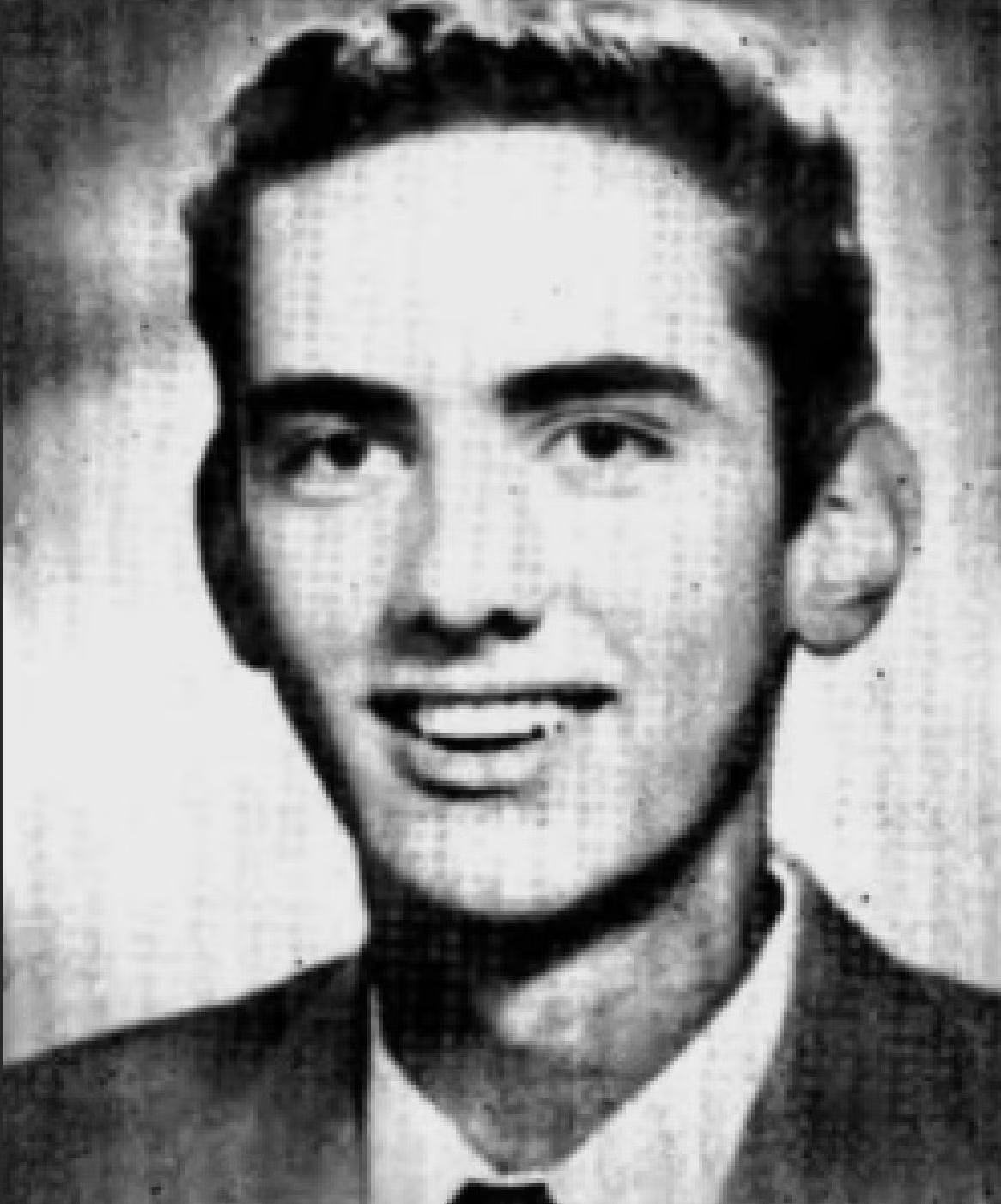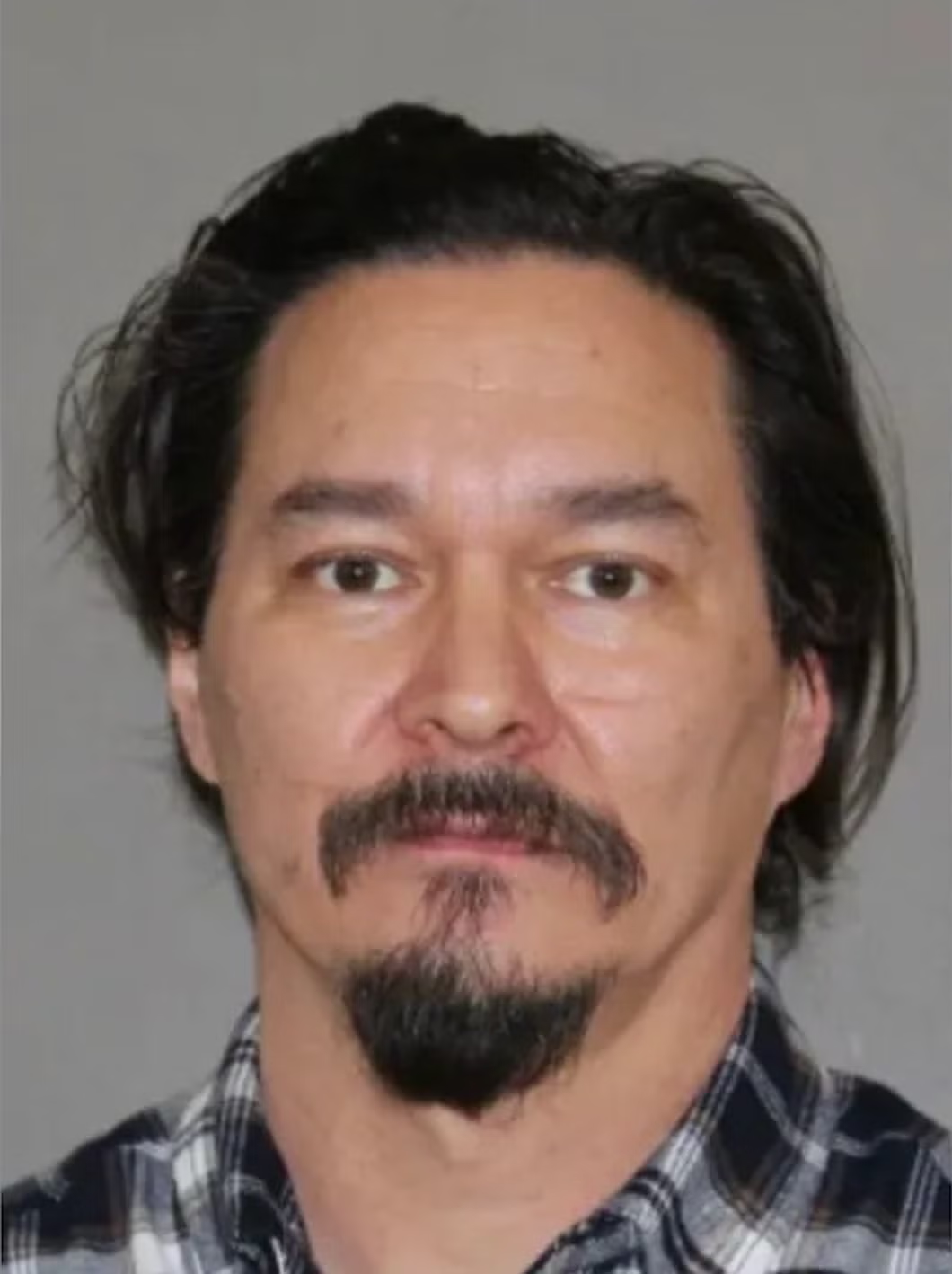
The search for answers in the wake of a horrific shooting spree across two of America’s most prestigious campuses has taken a grim turn. Claudio Manuel Neves Valente, the 48-year-old Portuguese national identified as the gunman behind the tragedy at Brown University and the murder of a brilliant MIT professor, was found dead in a storage locker in Salem, New Hampshire. An autopsy report released this week confirmed what many feared: Valente took his own life on December 16, just two days before authorities finally tracked him down. His death marks a silent end to a violent week that left families shattered and the academic world in mourning.
It all started on a Saturday at Brown’s Barus & Holley engineering building. What should have been a quiet study session for finals turned into a nightmare when Valente burst in and opened fire. The attack claimed the lives of two promising young students—Ella Cook, a 19-year-old sophomore from Alabama known for her “bright light” and leadership, and Mukhammad Aziz Umurzokov, an 18-year-old freshman from Virginia with dreams of becoming a neurosurgeon. Nine others were left wounded, and a community was left wondering how a former student could return decades later to inflict such pain.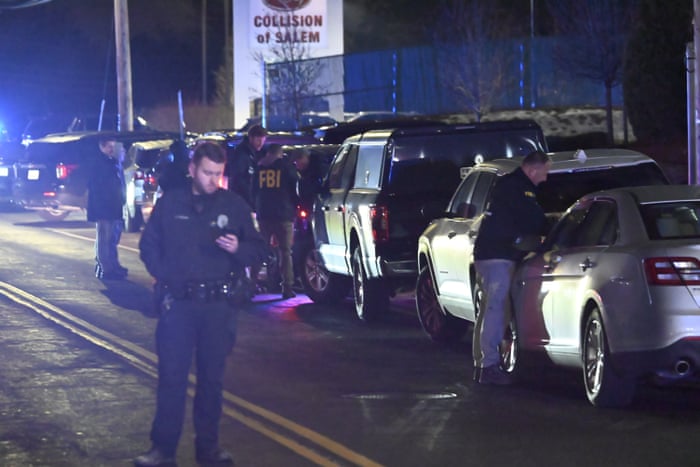
The violence didn’t stop in Providence. Just two days later, Valente surfaced in Brookline, Massachusetts, where he targeted 47-year-old Nuno Loureiro, a renowned nuclear physics professor at MIT. The two men shared more than just a home country; they had attended the same elite engineering program in Portugal back in the late ’90s. While Loureiro’s career had flourished, Valente’s had seemingly foundered. Investigators believe this deep-seated history may have fueled a resentment that finally boiled over, leading Valente to the professor’s doorstep on a Monday night.
For days, Valente was a ghost. He was “very strategic,” as one official put it, swapping license plates between Florida and Maine and navigating backroads to dodge police scanners. The breakthrough finally came from an unlikely source: a Reddit post by a homeless former Brown student named “John.” His observations about a suspicious man in a gray Nissan gave investigators the thread they needed to pull. That tip led them to a car rental office in Boston, which finally put a name and a face to the shadow they had been chasing.
When FBI SWAT teams finally descended on the storage facility in Salem, they found Valente’s body alongside a satchel containing two 9mm pistols and a bulletproof vest. Ballistics confirmed the grim reality: one gun matched the shell casings at Brown, and the other matched the scene of Professor Loureiro’s murder. It was a cold, calculated end for a man who former classmates described as “bored” and “hating” his time at Brown, claiming the curriculum was too easy for his intellect.
The political fallout was almost as swift as the investigation. The Trump administration used the tragedy to immediately order a suspension of the green card lottery program, claiming Valente had used it to enter the country. However, local law enforcement clarified that Valente actually arrived on a student visa back in 2000 and didn’t become a permanent resident until 2017. It’s a detail that adds another layer of complexity to a case that is already thick with questions about immigration, mental health, and the pressures of high-level academia.
Even with the suspect gone, the investigation is “far from over,” according to Portuguese and American officials. There’s a sense of relief in New England now that the manhunt is finished, but it’s a heavy kind of peace. In Providence and Cambridge, the focus has shifted from fear to memory. As students head home for winter break, they carry with them the weight of lost classmates and the haunting image of a man who once sat in their same classrooms, only to return years later as the author of their worst tragedy.