
Boston woke up to sorrow on Saturday after 79-year-old John Axelrod, a beloved art collector and cultural steward, was killed in what authorities are calling an intentional hit-and-run while walking his dog along Commonwealth Avenue Mall in the Back Bay. The violence near Hereford Street just after 8 a.m. has shaken a city already close-knit in grief and admiration for Axelrod’s decades of generosity.
Witnesses and police say Axelrod was taking his morning walk with his dog on the tree-lined pedestrian path when a vehicle mounted the mall and struck them both before speeding off. First responders rushed Axelrod to a nearby hospital, but he was pronounced dead a short time later. His dog also died at the scene, deepening the heartbreak felt by neighbors and friends.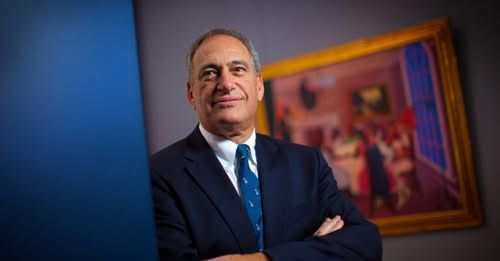
Boston police worked quickly to trace the vehicle’s registration and broadcast a description of the car. Officers from the Brookline Police Department later found the vehicle unattended in that town, setting off a wider investigation. By Sunday, officers had arrested 42-year-old William Haney of Boston, charging him with murder and cruelty to animals in connection with the incident. He is expected to be arraigned Monday in Boston Municipal Court.
What has stunned many is the allegation that the attack was not accidental. Prosecutors say Haney “intentionally” drove into the pedestrian mall and struck Axelrod and his dog, an assertion that has drawn sharp public reaction and deep concern over what sparked such an act against a peaceful neighbor. Police and prosecutors have not released a motive, and the investigation continues.
Axelrod was more than a familiar face in Back Bay. For decades he was a pillar in Boston’s art and philanthropic communities. As an honorary advisor and major supporter of the Museum of Fine Arts, Boston, he helped shape one of the country’s treasured cultural institutions. His contributions included a celebrated collection of nearly 70 works by Black artists, a move that significantly broadened the museum’s representation and impact.
In 2009, the MFA honored Axelrod by naming a gallery after him in the Art of the Americas Wing, a tribute to his vision of art as a bridge across cultures and histories. His gifts didn’t stop with fine art; he also donated important collections of European decorative arts and American modern design, leaving a rich legacy that will be seen and studied for generations.
Friends, colleagues, artists and civic leaders have poured out condolences since news of Axelrod’s death spread. Many recall his warmth, his fierce advocacy for underrepresented voices in art, and the quiet joy he took in sharing beauty with others. In a city built on stories and history, his chapter now stands as both inspiring and tragically cut short.