
North Carolina woke up Thursday to the news that one of its most influential public servants had passed away. James Baxter “Jim” Hunt Jr., the state’s longest-serving governor and a figure synonymous with education reform and civic dedication, died at the age of 88 at his home in Wilson County. The announcement came from his daughter, Lieutenant Governor Rachel Hunt, who described her father as her “beloved daddy and hero.”
Hunt’s death marks the end of an era in Carolina politics. Across party lines, leaders praised his lifelong commitment to expanding opportunities for people and strengthening communities. Sitting Governor Josh Stein called him a visionary whose work helped shape the state’s modern successes, from early childhood programs to higher teacher pay and environmental protections. Former Governor Roy Cooper lauded him as perhaps the greatest governor in state history, while Republican U.S. Senator Thom Tillis highlighted Hunt’s profound impact on public education and economic development.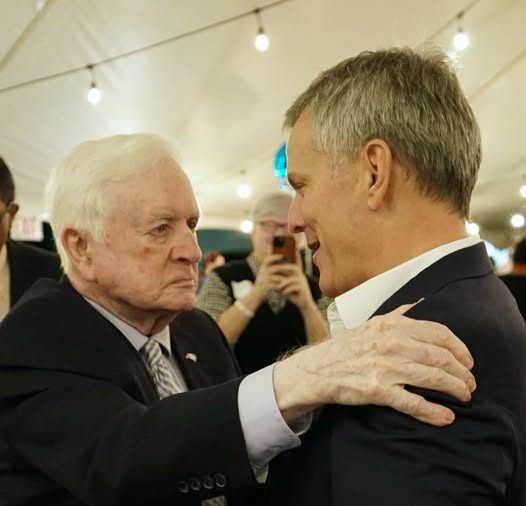
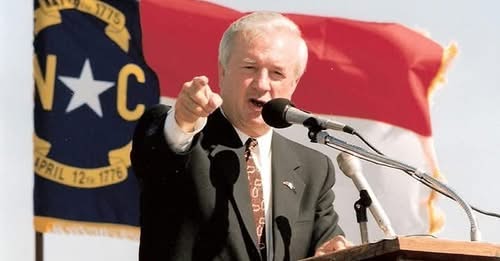

Born in Greensboro on May 16, 1937, Hunt grew up on a tobacco and dairy farm outside Wilson, where early experiences with rural life shaped his belief in public service as a tool for improving everyday lives. After law school and a stint with the Ford Foundation overseas, he dove into North Carolina politics. He was elected lieutenant governor in 1972 and then governor in 1976, beginning a four-decade political journey that would alter the state’s direction.
Hunt’s tenure in the governor’s mansion was historic. He served four terms — from 1977 to 1985 and again from 1993 to 2001 — thanks in part to a constitutional amendment he supported that allowed consecutive terms and introduced veto power. His leadership style was rooted in pragmatism and collaboration, especially on education and economic diversification. Under his watch, North Carolina became a national leader in early childhood initiatives like Smart Start and expanded teacher salaries to be competitive with national averages.
Beyond schools, Hunt pushed the state toward a high-tech future, championing the creation of the North Carolina Biotechnology Center and nurturing growth in Research Triangle Park. He played a crucial role in modernizing the economy during a period when traditional industries like textiles and tobacco were in decline. His influence wasn’t confined to state borders: Hunt’s advocacy for education reform resonated with policymakers across the country.
Not every chapter of his career was without controversy. In his early years as governor, Hunt commuted the sentences of individuals convicted in the 1971 Wilmington firebombing case, a decision that only saw full pardons come decades later. But through it all, Hunt remained a figure deeply engaged with the issues of his time, often pushing late into the night to persuade lawmakers and build coalitions.
Even after leaving elected office, Hunt stayed active in public life, mentoring rising politicians — including his daughter Rachel, whose own political ascent to lieutenant governor continued the family’s legacy of service. As memorial arrangements are being finalized and details shared in the coming days, North Carolinians are reflecting on a leader whose work transformed their state in lasting ways.